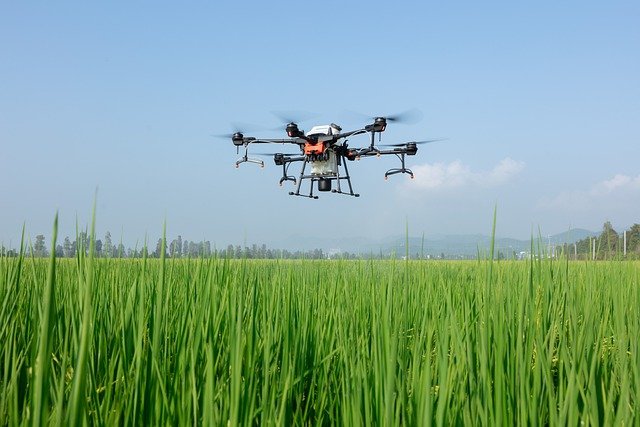
The unmanned industry has been rapidly growing owing to significant developments such as considerable reduction in size, weight, and cost, enhanced battery life, and increased degree of autonomy in its operation. Additionally, drones have been adopted across the globe for various applications such as infrastructure, logistics and transport, insurance, media and entertainment, telecommunication, agriculture, mining, oil & gas, and defense. Currently, there are about one million drones registered with Federal Aviation Administration (FAA), and the number is increasing day by day. With a huge number of drones in the air, efficient detection systems can play a great role in alleviating potential risks associated with drone usage.
Read Report Overview: https://bisresearch.com/industry-report/global-anti-drone-market.html
However, the ease in availability of drones or unmanned aircraft systems (UASs) has also given rise to their malicious usage. There have been several incidences of drone detection and close encounters with commercial aircraft in various regions, which have posed a threat to lives as well as commercial aircraft operations. Additionally, there is a rising number of illegal and terrorist activities and increasing incidence of security contravention by unsanctioned UAVs, which have posed a threat to the national security of the various countries. Hence, this creates a need for counter-UAS (anti-drone) technologies to tackle the growing threats from drones.
Counter-drone technology, also known as C-UAS, counter-UAS, or C-UAS technology, refers to a type of device used to locate, fix, track, identify, and neutralize unidentified unmanned aerial vehicles (UAVs). The increase in the use of commercial drones and incidents has resulted in the necessity for counter UAV technology or anti-drone systems which neutralize rogue drones. Some of the anti-drone systems use sensors to detect UAVs, identify threats using electro-optical/infrared imagery and RF emissions, and neutralize the threat posed by unidentified UAVs.
A counter-UAS is capable of detecting, tracking as well as seizing the UAVs. Some of the techniques that are used to detect and trail UAS are radar, electro-optical/infrared, radiofrequency, and acoustic systems. Interdiction helps in neutralizing UAVs which reduces the threats posed by drones. Further neutralizing of drones can be done based on protocol-based interdiction, sensor-based interdiction, jamming, or physical interdiction. The challenges that are faced while adopting these technologies include economic feasibility, effective contingency plans, and regulations, among others.
Request a Sample: https://bisresearch.com/requestsample?id=1228&type=download
The initial adopters of counter-UAS technologies have been defense organizations; the C-UAV systems are now being installed at the critical infrastructure around the world. The tools and techniques used by militaries, defense organizations, and police include GPS spoofing, drone nets, RF jammer guns, among others, in the anti-drone system.
 UPCOMING INDUSTRY TRENDS