On account of the COVID-19 pandemic, many developed and developing countries are facing a full or partial lockdown situation since March 2020, affecting the operation and supply chain of companies in multiple industries. The defense industry falls into the category which is highly exposed to a large number of externalities, such as political, economic, and social. Revenue generation of the defense industry is majorly from the defense budget allocated by the government for procurement, and research and development activities. It is expected that due to the COVID-19 pandemic, the defense industry will face a low to medium impact for short term (2020-2023) period caused by anticipated reduction in defense budgets by leading countries. However, in medium to long term (2024-2030), the defense industry will likely grow further as COVID-19 will not mitigate the worsening of international security and threat. On the contrary, it is likely to make the world more unstable and more insecure. The impact of COVID-19, particularly on the 3D & 4D military radars market, will also show a decline in growth and market size due to supply chain disruption and production loss.
The Asia-Pacific or APAC had the highest growth in the global 3D & 4D military radars market in 2019, and the trend is estimated to continue during the forecast period, 2020-2025. The region has been segmented by country into China, India, South Korea, Japan, Australia, and Rest-of-Asia-Pacific. The growth of the 3D & 4D military radars market in the region is majorly driven owing to the rising military budget in countries such as China, India, and Japan. The governments of these countries are investing in the development and procurement of new advanced radars with 3D & 4D technology. Continuous threats from North Korea also push South Korea to modernize its military equipment. Further, initiatives of governments to promote the development and deployment of 3D & 4D military radars also provide new prospects to manufacturing companies to integrate such technology in vehicles.
Currently, 4D military radars are gaining more popularity in air and missile defense applications. The market has considerably evolved in developed regions such as North America and Europe and is gaining popularity in geographies such as the Asia-Pacific and the Middle East and Africa (ME&A). It is experiencing further growth because of various aspects such as the increase in defense budgets of various countries and huge investments for research and development of 4D radars.
The market research study offers a wide perspective of the different types and industries pertaining to the global 3D & 4D military radars market and analyzes its impact on different regions by providing critical insights into the direction of its future expansion. The research is based on extensive primary interviews (in-house experts, industry leaders, and market players) and secondary research (a host of paid and unpaid databases), along with the analytical tools that have been used to build the forecast and the predictive models.
Obtain the Sample Report at: https://bisresearch.com/requestsample?id=962&type=download
There has been a significant rise in the interference activities among hostile nations, which has resulted in growing interest and escalating demand for integration of advanced radar technology with different military platforms such as airborne, ground, and naval across the globe. Due to increasing military budget inflows across the globe and growing conflicts among various countries, the demand for more robust positioning, navigation, and 3D & 4D military radars are in substantial demand.
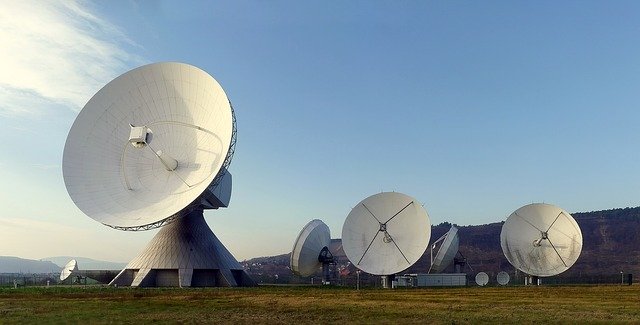
The advancement in radar technology is mainly driven by two factors: the use of machine learning algorithms to enhance the raw radar signals, and advancements in silicon technology leading to miniaturization. The applications of radar technology such as weapon guidance, airspace monitoring and traffic management, ground surveillance and intruder detection, air and missile defense, navigation, mine detection and underground mapping, airborne mapping, ground force protection and counter battery, and weather monitoring have been grown multi-fold in recent years in the military and defense industry.
 UPCOMING INDUSTRY TRENDS