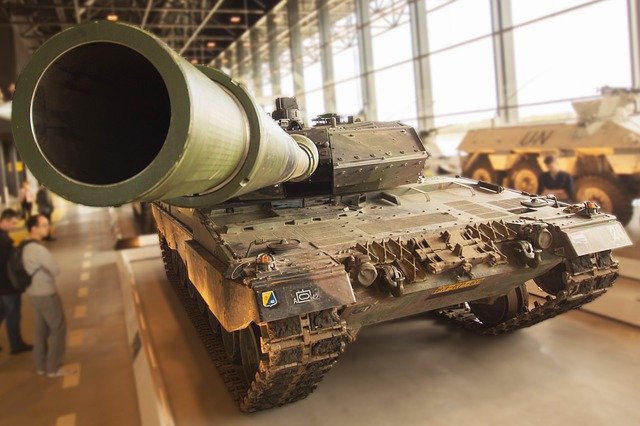
Active propulsion systems in military ground vehicles are powering the vehicles with full capability, however, there still exists a need for advancement toward more electric and hybrid systems which can reduce maintenance cost, idling, fuel use and emissions on a relatively faster pace. Transporting fuel for the battlefield through dangerous routes over long distances is a factor that adds up the fuel cost significantly. It may range from $1 per gallon in a regular civilian situation to $400 per gallon during battlefield. In case of the requirement of airlift, the fuel cost may reach up to $1,000 per gallon especially in warzones. Thus, advanced engines (including electric and hybrid propulsion systems) which may contribute to huge fuel cost saving coupled with elimination of acoustic noise and electromagnetic interference (EMI) levels are expected to achieve greater market penetration during coming decades.
Report Overview: https://bisresearch.com/industry-report/military-ground-vehicle-propulsion-system-market.html
Owing to increased survivability requirements, increased protection measures have been assimilated to the military vehicles which increase overall vehicle weight and in turn lead to decreased reliability, fuel efficiency, and associated vehicle transport capability. Further, burgeoning weight of armor and weapons have also forced the engines to become larger and making the vehicle heavier. Such heavy-weight vehicles have created the need to bring about advancements toward establishing state-of-the-art light-weight military vehicles.
Also, increasing conflicts, political instability, and terrorism activities, coupled with increasing border instability force countries to strengthen their military ground vehicle capabilities. Therefore, the defense forces of various countries including the U.S., India, China, the U.K., Poland, and others are increasing their budget for procuring military ground vehicle with advanced engines for their military personnel. On October 2019, BAE Systems, Inc. debuted Robotic Technology Demonstrator (RTD) unmanned ground vehicle which features autonomous mobility with hybrid electric drive for fuel efficiency to support situational awareness and reconnaissance.
The global military ground vehicle propulsion system industry is one of the most competitive industries with the leading players actively competing against each other to gain a greater share in the industry. The competitive landscape of the military ground vehicle propulsion system industry exhibits an inclination toward emerging strategies and developments by market players.
The key players that are actively participating in the military ground vehicle propulsion system market include General Dynamics, QinetiQ Group, Israel Aerospace Industries (IAI), BAE Systems, Lockheed Martin, Northrop Grumman Corporation, Oshkosh Corporation, Harris Corporation, Rheinmetall AG, Epsilor-Electric Fuel Ltd, Leonardo S.p.A, Cummins Inc, Caterpillar Inc, General Motors Company and MTU Friedrichshafen GmbH.
For Sample Report: https://bisresearch.com/requestsample?id=814&type=download
The prominent players in the military ground vehicle propulsion system market adopted strategies of product launches, partnerships, collaborations and contracts, and other strategies to expand their business. The companies are also involved in some of the other developments that include mergers and acquisitions, facility expansion; product extension and upgradation, and funding to develop advanced systems for vehicles. Due to the intensive competition, the military ground vehicle propulsion system industry requires manufacturers to constantly innovate and develop cost-effective engines with the existing and forthcoming industry standards for various military applications. The market is likely to grow rapidly with the developments in new and remanufactured engines with longer endurance and efficiency.
 UPCOMING INDUSTRY TRENDS