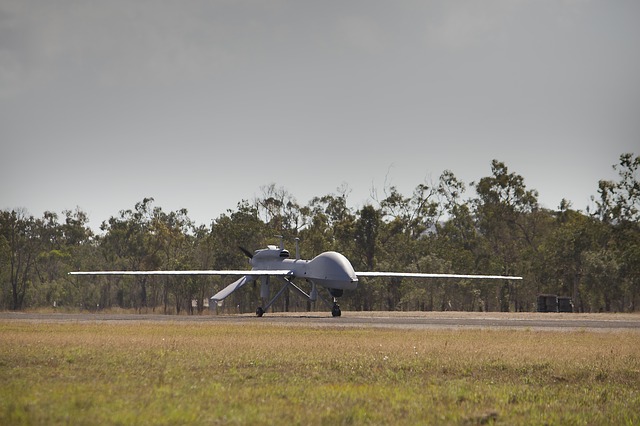
The growing political tensions in the global arena has resulted in the development of new technologies to enhance the current inventory by military forces. Unmanned aerial systems are one of the major verticals in the military that are experiencing significant growth. Unmanned Aircraft Systems (UAS) have rapidly become one of the primary military weapons for crucial lethal and non-lethal operations. UAS primarily comprises of unmanned aerial vehicle, the ground control station, and an operator. The UAV operator controls the UAV using radio, cellular or satellite link from a remote location. GCS can be mobile, vehicle-mounted, or stationary based on the application.
Read Report Overview: https://bisresearch.com/industry-report/military-unmanned-aircraft-systems-market.html
Unmanned Aerial Vehicles (UAVs) are used for combat operations, remote sensing, battle damage management, and search and rescue, among others. The U.S., China, India, and Turkey, among others, are significantly developing UAS technology to enhance their warfare capabilities as UAVs provide better efficiency, long-endurance, remote operations without endangering human life, and precision targeting, among others. The various applications of UAVs in the defense industry, such as gathering intelligence, surveillance of hostile environments, and reconnaissance, have made them a huge asset in the battlefield. Various companies are continuously researching and developing next-generation UAV technology to make them more efficient, reliable, and autonomous for military applications.
UAVs are being used globally by military forces across the world. UAVs have become pivotal forms of arsenal in all military forces due to their enhanced capabilities. It is being observed that military budgets for UAVs are growing due to advancements in UAV technologies.
The strategies adopted by the key players in the global military unmanned aircraft systems market to gain a significant market share in the growing industry of military UAVs have been varying from product launches to acquisitions to partnerships over time. The key developments and strategies segment provides comprehensive insights into the different market development activities that are currently being conducted by various key players in the industry to compete with each other directly. A company can lead the market and gain overall growth by adopting several strategies, such as introducing innovative products from time to time, improving the framework of its existing products, collaborating with other market leaders, and acquiring relatively weaker companies into its domain.
UAVs are classified as Remotely Piloted Vehicles (RPVs) and automated drones based on their mode of operations. Unmanned aerial vehicles were first used during World War I, where both the U.S. and France were working on the development of automatic aircraft. Moreover, the need for the development of unmanned aerial vehicles is perceived during World War II due to huge losses that occurred by the reconnaissance aircraft. Although the adoption of UAVs took a long time as the technology was under research for a long time. However, unmanned aerial vehicles were first seen during 1973 during the Vietnam War for reconnaissance operation.
For Report Sample, Click here: https://bisresearch.com/requestsample?id=844&type=download
Moreover, other countries also started exploring UAV technologies. Over the years, UAVs are becoming more advanced with enhanced endurance and range. Since the 9/11 attacks, the U.S. has significantly increased the usage of UAVs primarily for an inspection operation. However, there is a controversy as well, especially when the UAV operation results in civilian deaths. In the modern world, drones have a significant usage primarily for defense applications. Drones are used primarily for applications such as Intelligent, Surveillance, and Reconnaissance (ISR), Target Acquisition, battle damage management, search and rescue missions, combat operations, and delivery & transportation, among others.
 UPCOMING INDUSTRY TRENDS