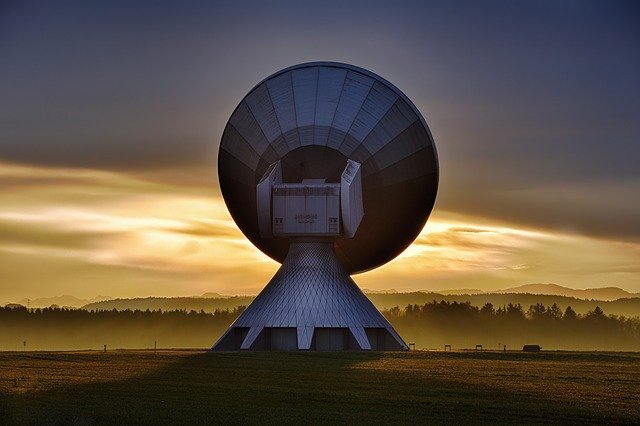
competitive advantages, such as lower latency and ultra-fast network, over previous generation networks (such as 3G or 4G), provided by 5G networks are expected to create growth opportunities for the 5G satellite communication network. The evolution of 5G is expected to create a new age of mobile communication in three main field – enhanced Mobile Broadband (eMBB), massive Machine Type Communications (mMTC), and Ultra-Reliable and Low- Latency Communications (URLLC). These fields require different latencies and high bandwidths, which can be provided by various satellite solution networks, namely backhaul and tower feed, trunking and head-end feed, communication-on-the-move, and hybrid multiplay.
Read Report Overview: https://bisresearch.com/industry-report/5g-satellite-communication-market.html
Factors such as high energy saving, low latency, ultra-reliable network, and higher bandwidth of a 5G network are leading to an increase in the development of use cases in aviation and consumer electronics. Moreover, increasing demand for the connected ecosystem is facilitating a wide adoption of 5G communication satellite systems by the network operators.
The development process of a communication network has proven to be a vital part of the network technology ecosystem. The changing needs of the end-user, as well as the enterprise market, require higher bandwidth, increasing data traffic across various sectors. Data-intensive applications and increased use of connected devices have created congestion in today’s networks, thus driving the need for network evolution. To address these growing needs of speed, reliability, and low latency, 5G networks have been introduced.
The next generation of wireless networks addressed the development of massive M2M and internet of things (IoT) applications, fast broadband speed, and significantly reduce the cost for mobile and fixed networks. 5G offers high-speed internet connectivity, low latency, and enhanced safety measures to support the end-user industries such as aviation, consumer electronics, transportation & logistics, energy & utilities, and heavy industries. Besides, significant changes in the demand of consumer for the higher bandwidth, low latency, and seamless connectivity to remote areas has led the telecom companies to collaborate with satellite operators. It will create enormous opportunities for satellite as mobile network operators to balance their 5G services with satellite connectivity and offload their terrestrial networks on a large scale. They will be able to take advantage of satellite’s inbuilt multicasting/broadcast functionality for new use cases, such as connected cars.
Satellite solutions such as backhaul and tower feed, trunking and head-end feed, communication-on-the-move, and hybrid multiplay are helpful to the mobile operators in a longer range for the rollout of 5G network in remote areas where terrestrial network for the development of broadband services is too costly. Moreover, functionalities of the satellite, such as backhauling, multicasting, and mobility access, enable mobile and fiber operators to expand their coverage areas. Many key players are planning to launch the integration of 5G and communication satellite in the near future. For instance, Industry leaders such as SpaceX and OneWeb are planning to launch 5G-satellite integration networks by 2023, to cater to the growing needs for speed, reliability, and low latency.
For Report Sample, Click here: https://bisresearch.com/requestsample?id=861&type=download
In the present and initial phase of 5G, the telecom industry is focused upon positioning enhanced mobile broadband use cases for providing faster speed and lower latency than those of the 4G network. Moreover, in the near future, with the introduction of New Radio (5G) and Standalone Access, 5G is expected to become more reliable in terms of Gbps speed and latency. However, currently, neither of these technologies is addressed by the satellite communication operators, as providing the backhaul services through Gbps is highly expensive, and latency below 50ms cannot be achieved without the launch of LEO constellation. This can make satellite communication a difficult task for the deployment of satellite with 5G enhanced mobile broadband, as satellite operators are positioning fiber for backhaul services in dense areas but not in rural areas, where satellite backhaul services can have a competitive advantage over 5G enhanced mobile broadband.
Apart from this, upcoming use cases, such as massive machine type communication (mMTC) and ultra-reliable communications (URLLC), are expected to be more feasible for satellite communication in the coming future, as mobile operators are currently still in the deployment phase for the IoT network using 4G technology. Moreover, apart from the challenges faced by satellite operators, such as issues related to the launch of LEO constellation satellite and backhaul services through Gbps, there is an opportunity for 5G-satellite integration in the near future.
The aviation industry is expected to be the second largest with consumer electronics as the frontrunner in the global 5G satellite communication market. The development of network technology (from 2G to 5G) has enhanced the Machine to Machine (M2M) communication by providing lower latency and higher bandwidth. The evolution in smartphone technology, growing importance of connectivity and safety, and high-speed internet connectivity have significantly transformed the aviation industry. Out of the wide area of end-users, satellite plays a vital role in connecting remote devices that cannot be assessed with terrestrial connectivity. Satellites can potentially integrate the gathered information from monitoring, fixed, and mobile remote assets. It is expected that by 2021, the 5G satellite communication market would be dominated by Gilat Satellite Network, Avanti Communication, and VT Direct, among others. However, due to the huge growth in the market, new players are emerging in the market.
 UPCOMING INDUSTRY TRENDS