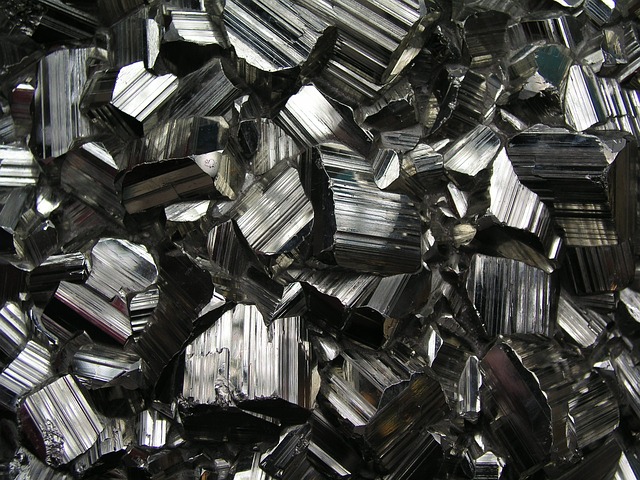
The steel and automotive industry are the two major contributors in generating the demand for needle coke in the global market. The development of these industries is continuously driving the growth of needle coke, creating a more robust demand for the crystalline material in the downstream ecosystem. In the coming years, needle coke is expected to witness high demand due to the constant push from the government bodies toward the adoption of electric vehicles throughout the world.
Needle coke is extracted from two carbon sources and is of two types: petroleum-based and coal-based. Petroleum-based needle coke is significantly providing a push to the needle coke market in the end-use industries, where it is being used as a crucial raw material.
Needle coke is used most significantly in the production of graphite electrodes and lithium-ion batteries by electric arc furnace (EAF) steelmakers and battery manufacturers. Graphite electrode manufacturers use needle coke driven by its excellent characteristics that include withstanding a high temperature of around 2800°C, providing high thermal expansion coefficient and electrical resistivity. The steel and automotive industry posit a high demand for needle coke owing to its numerous characteristics.
The needle coke industry is a highly concentrated market, which consists of around ten key players from around the globe. The U.S., China, and Japan are the countries majorly producing a vast quantity of needle coke. The U.S. accounts for a major percentage of petroleum-based needle coke production, and China is leading in terms of coal-based needle coke production. The two countries are leading the market owing to the market contribution made by their giant players.
For Sample Report, Click here: https://bisresearch.com/requestsample?id=863&type=download
Needle coke is most significantly used in the production of graphite electrodes for the EAF steelmaking process. This EAF steelmaking process is being adopted by emerging economies and has acquired a significant share in developed regions such as Western Europe and North America. China is the largest producer of steel in the world, and the Chinese government has adopted certain firm steps and regulations to curb pollution and has also introduced regulatory norms for the adoption of the EAF steelmaking technique in the country. China is effectively adopting the EAF technique for the production of steel, escalating the demand for needle coke in the China-based market.
Needle coke is categorized into two types: oil-based and coal-based needle coke. Petroleum-based needle coke is used to produce ultra-high purity (UHP) needle coke, which finds its applications in the production of the graphite electrode that is used for steel manufacturing in EAF. Petroleum-based needle coke is also used in the production of lithium-ion battery anodes, which are used in electric vehicles for delivering high performance. Some of the key players of U.S.-based petroleum needle coke are GrafTech International Ltd. and Phillip 66 Company.
Going by the prevailing trend of the electric vehicles industry in 2018, the production of EVs is estimated to triple in production by the end of 2020, leveraging the growth in demand for lithium-ion batteries in the coming years. Needle coke is used in the manufacturing of lithium-ion batteries and is recording impressive expansion driven by the growth of combustion-free vehicles in the global market. The EV battery manufacturers have shifted from graphite to needle coke in the last couple of years, driven by its high performance. This has resulted in the exponential demand for needle coke generated from EV battery manufacturers of the ecosystem. Earlier, car manufacturers were using lead-acid batteries, which are now replaced by Li-ion batteries owing to the poor service life of lead-acid batteries. Nowadays, automakers manufacturing EVs, and plug-in hybrids are shifting toward lithium-ion batteries for better performance results such as low maintenance, high energy density, an increased number of charge cycles, among others. Some of the vital EV battery manufacturers producing lithium-ion batteries are Nissan Global, Contemporary Amperex Technology (CATL), and LG Chem Ltd.
 UPCOMING INDUSTRY TRENDS