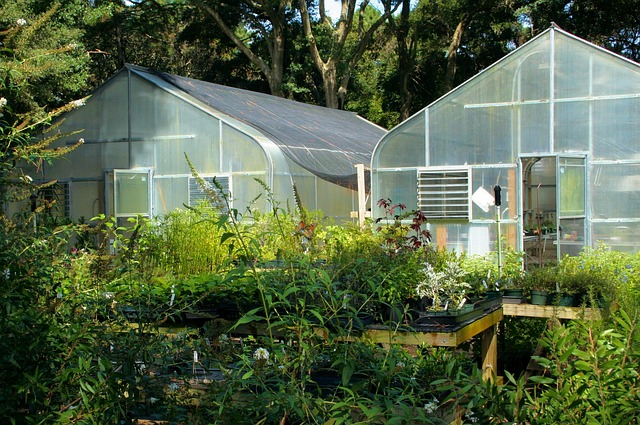

Due to the gradual change in food consumption patterns, the global food economy is being progressively compelled to evolve over time. Indoor farming has emerged as a perfect alternative to the conventional farming technique that has been adopted at the non-commercial and small scales since the early 1900s. For a long time, the practice of growing crops in greenhouses, which have been predominantly low-tech, has been existent. With the growing innovations in urban planning and sustainability, indoor farming has gained tremendous importance in the cities as a local method of production. Across the globe, think tanks in the U.S. and Japan have increased awareness of indoor farming. This has led to the increased association of technological developments in every operation carried out at an indoor farm. Till the year 2018, the most established technology is the hardware components, such as lighting, climate control systems, sensors, and monitors, which assisted in the indoor cultivation of crops.
Read Report Summary: https://bisresearch.com/industry-report/indoor-farming-technologies-market.html
Several developments in the application of software and related services and technology automation to eliminate human interference are few steps adopted in the industry to meet the increasing need for making indoor farms profitable. The majority of developed and developing nations such as the U.S., Canada, the United Kingdom, the Netherlands, and Japan, are among the early adopters of advanced technologies and offer better opportunities to technology providers and growers in comparison to others. However, emerging countries such as China, India, the U.A.E., Mexico, and Singapore, are also contributing to this rising demand for products by increasing the incorporation of indoor farms and adopting the latest technologies. Additionally, this growth in developing countries has been largely propelled by increasing urban population and growing disposable incomes, which in turn have stimulated the growth in the consumption of fresh, healthy, and nutritious food.
Owing to the adverse impacts of climate change, rising global temperatures, and increasing chances of drought in landlocked areas, stakeholders in the agricultural field are exploring alternatives to conventional farming methods. The burgeoning global population is also impacting the agricultural produce in regions where most of the population is working and is concentrated in urban areas. The demand for fresh and organic produce is surging rapidly, especially amongst the upper-middle class that resides in urban areas. According to the Food and Agriculture Organization (FAO) statistics, the trend is likely to continue over the upcoming years.
The United Nations has urged the governments across all countries to ensure the availability of enough food for everyone by assigning the issue as a part of the Sustainable Development Goals, which is a mandate that the member countries adhere to. Regions of South Africa and Asia-Pacific are home to a large number of undernourished populations. These regions are anticipated to display huge growth prospects supported by strong population growth and rising incomes in the coming years. Technology players operating in the indoor farming sector are striving to improve the operational capabilities for cost-effective commercial establishments.
Obtain the Report Sample: https://bisresearch.com/requestsample?id=717&type=download
In the process of addressing global food availability, farmers also focus on a large number of yields or cycles of production for one batch of crops. Indoor farming provides an opportunity for farmers to grow crops in a completely controlled environment, which is monitored and can be manually changed as required at different stages of growth of crops. By incorporating technologies, indoor farming can yield crops as high as 18 times that of traditional outdoor farming. With the impact of climate change, the gap between the amounts of yield indoors and outdoors is increasing with the passage of each year.
Growers across the globe have gradually implemented cost-effective solutions to achieve proper and full growth of crops grown indoors and reduce the operational costs. The technology market in indoor farming is expected to progress at a healthy rate by the ever-growing affinity for safe and nutritional produce.
However, such revolutionary changes in farming practices not only come with opportunities but also some challenges, which prove to be a restraint in the growth of the market. High initial investments involved in setting up an indoor farm hinder the adoption of indoor farming by various small-scale growers. High costs of real estate across North America, Europe, and high-income countries of Asia-Pacific, is responsible for indoor farms to shut operations due to non-profitability. Application of technology in this sector adds to the daily operational costs in terms of energy consumption throughout the day, all year round. High energy costs in urban areas make it difficult for growers to make their establishment profitable. Thus, technology providers need to come up with cheaper solutions that require fewer energy inputs.
 UPCOMING INDUSTRY TRENDS